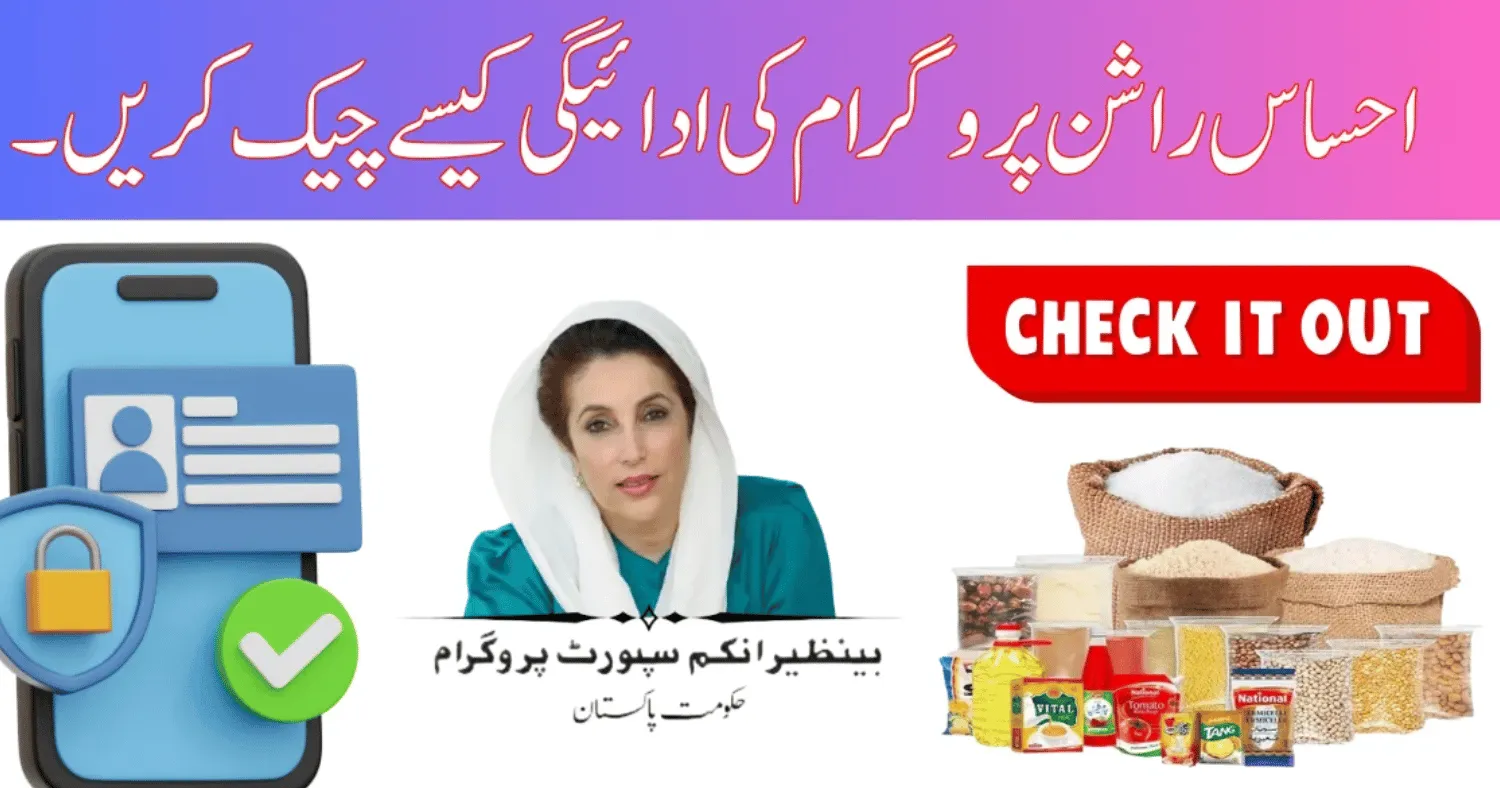
A Practical Focus on Punjab’s 8123 Flow
When people in Punjab ask where to begin, the most direct path still runs through SMS to 8123 using a valid CNIC. That single step kicks off status checks, routes you toward the nearest e-center, and ties your application to the online portal for tracking. In practice, applicants who keep their identity card data updated and valid see smoother verification—especially when biometric thumb scans are required at the Registration Center.
Who Should Prioritize Applying
Households under pressure from inflation, food prices, and rising kitchen expenses should look carefully at the subsidies on flour, rice, ghee, and sugar. If your income is low-income or lower amdan, and your household size is larger, you likely fall in the primary priority band. Vulnerable groups—widows, orphans, and people with disabilities or differently-abled status—receive added consideration, provided the information submitted is true and verified against program guidelines.
What the Subsidy Looks Like at the Counter
At utility stores and affiliated shops, shoppers can see up to 40% discount on staples. Typical baskets include Flour 10kg, Sugar 1kg, Ghee 1kg, Rice 1kg, and Daal 1kg. You’ll also find culturally specific essentials—lentils, daal, cheeni, patti—reflected in the subsidized prices. Families often report meaningful savings that help with education, health, and other household needs.
- Flour 10kg: a marked drop from 1600 to 1000, yielding 600 in savings
- Sugar 1kg: a cut from 180 to 120, saving 60
- Ghee 1kg: 700 to 450, a 250 relief
- Rice 1kg: 280 to 180, saving 100
- Daal 1kg: 320 to 220, saving 100
These numbers vary by announcement cycle, but the overall support improves purchasing power in months when cash is tight.
Registration, Step by Step
- Send SMS “CNIC number” to 8123 to trigger status checks.
- Visit the nearest e-center for document submission (ID cards, certificates, papers).
- Complete biometric verification (often a thumb scan) at the Registration Center.
- Receive a confirmation message and keep your tracking details handy for online progress.
- On approval, expect delivery instructions or card pickup guidance.
A common pitfall is mismatched mobile phone details; ensure the SIM is registered against the same CNIC to reduce delays.
Documents That Smooth the Path
Bring the original applicant CNIC plus copies for family members. Add proof of income—a salary slip or self-declaration for daily wage workers—and the right certificate if you’re a widow or have a disability. A well-prepared folder reduces rejection risk and keeps the process easy, transparent, and free from unnecessary back-and-forth with agents.
Why the 8123 Band Matters in 2025
The program remains a bright spot for households facing sustained inflation. Under national leadership—including PM Shahbaz Sharif—allocations (e.g., 120 billion rupees) back the scheme with resources that extend beyond Ramadan into regular months. Families can receive monthly relief—often framed as 2000 or Rs. 2000 support—and enjoy discounts at affiliated stores. The intent: restore a little light, hope, and food security where budgets are thinnest.
Punjab’s Riayat Structure—What to Expect
In the Punjab riayat track, registered families can see a 30% discount plus monthly stipend elements designed to promote a dignified life. Distribution runs through affiliated stores and utility outlets; your online portal view and message alerts help you time visits and avoid peak crowds. Keep your identity footprint consistent across the system—names, dates, and addresses should match cards, certificates, and papers.
Shopkeepers, Banks, and the Last Mile
The program relies on shopkeepers and stores at the neighborhood edge, which is why the onboarding of merchants through banks matters. The Bank of Punjab (BOP) and National Bank of Pakistan (NBP) collaborate on a merchant platform that verifies documents and authorizes participants to participate in the welfare initiative. For a retailer, the drill is straightforward:
- Visit Bank of Punjab (BOP) or National Bank of Pakistan (NBP).
- Submit required documents for merchant registration.
- After successful verification, get authorized to serve beneficiaries and process the subsidies.
The payoff: a standardized program that widens the acceptance network, cuts fraud, and makes distribution fair.
Making the App and Portal Work for You
The Ehsaas Rashan App and the online portal reduce repeated trips and keep paperwork tidy. Expect updates on distribution schedules, announcements about eligibility criteria, and checkpoints for processing stages. People who prefer phone-based management appreciate that the system is increasingly digitized, allowing them to register without an office visit or in-person queue. If you do go in, bring every relevant certificate—it saves time at the counter.
Field-Tested Tips for Faster Approvals
- Keep every certificate photocopied and stapled behind your ID cards.
- Cross-check your CNIC number and mobile phone details; both should be registered to the applicant.
- If you receive a rejection, fix the mismatches (spelling, address, salary slip, or missing papers) and reapply quickly.
- Watch for peak crowd days after major announcements; timing your visit can shorten the line.
- Save screenshots of status and message confirmations from the portal.
What You’ll See at the Store
At checkout, the system recognizes your CNIC and applies the subsidized prices. Clerks may ask for a thumb scan if the terminal is set for biometric checks. Keep an eye on line items like Flour 10kg, Ghee 1kg, Sugar 1kg, Rice 1kg, and Daal 1kg—these anchor most staple baskets. You can also find additions like lentils, daal, cheeni, and patti in many local contexts, especially where affiliated stores tailor inventory to neighborhood demand.
Why Accuracy Beats Speed
A neat application usually moves faster than a rushed one. Clean, verified details—information that’s true—prevent detours. The system is designed to be free, easy, and transparent, but it still depends on exact matches: the name on your identity card, the address on your certificates, the phone number you use for SMS. Standardizing those fields cuts down on manual remediation during processing and protects against fraud.
The Human Side: Relief that Stretches
Even modest savings can bridge gaps during exam months or when a wage earner’s hours dip. Many families say the discount on staples lets them reallocate a little toward education supplies or clinic visits. For marginalized groups, that stability often feels like the difference between scraping by and maintaining a dignified life.
Conclusion
The Ehsaas Rashan 2025 framework is built to soften the blow of rising food prices for low-income households, especially in Punjab. By tying eligibility to verified CNIC data and using SMS 8123, the online portal, and biometric checks at Registration Centers/e-centers, the process stays simple, transparent, and resistant to fraud. For families juggling rent, utilities, school fees, and groceries, targeted subsidies on staples—flour, rice, ghee, sugar, daal/lentils—can free up a meaningful slice of the monthly budget. In many cases, the system combines up to 30–40% discounts at affiliated utility stores/kiryana shops with program support such as a Rs. 2000 monthly component (subject to government updates).
Success mostly hinges on accurate paperwork. Keep your original CNIC, copies for family members, and proof of income (salary slip or self-declaration for daily wage earners) ready; attach supporting certificates for widows or persons with disabilities. Ensure your mobile number is registered against the same CNIC you submit—this prevents common status/OTP mismatches. If something is off, fix it quickly and re-apply; the system is designed to resolve errors, not trap you in them.
The merchant side matters too. Shopkeepers onboard through Bank of Punjab (BOP) and National Bank of Pakistan (NBP) for verification and authorization. This widens acceptance, improves last-mile access, and helps keep pricing uniform and auditable. Whether you use the Ehsaas Rashan App or the web portal, expect status updates, distribution schedules, and announcements to guide your trip to the counter and minimize queues.
At its heart, Ehsaas Rashan aims to protect dignity. A predictable discount at checkout means parents can keep staple foods at home while redirecting precious rupees to medicine, transport, or study materials. With clean documentation, vigilant phone/CNIC alignment, and timely follow-through, households can turn a complex economic moment into something manageable—and a little more hopeful.
FAQs
Who is eligible?
Low-income households, larger families, and vulnerable groups—widows, orphans, and persons with disabilities—are prioritized. Eligibility is verified against CNIC records and program guidelines.
How do I start registration?
Send your CNIC number via SMS to 8123. You’ll receive an eligibility/status reply and guidance to proceed via the online portal or the nearest e-center/Registration Center.
What documents are required?
Original CNIC, copies for family members, proof of income (salary slip or self-declaration), and relevant certificates (e.g., widow, disability). Keep everything valid and up to date.
How are discounts applied at stores?
At affiliated utility/kiryana stores, the system validates your CNIC (and may use biometrics) and applies the subsidized prices automatically at checkout.
Which items are typically covered?
Core staples: flour, rice, ghee, sugar, daal/lentils. Availability and exact discount percentages can vary by announcement and location.
What does “8123” do?
It’s the official SMS short code for initial checks. Sending your CNIC to 8123 returns eligibility or next steps and links your record for tracking.
Is there any fee to apply?
No. Registration is free. Avoid agents or middlemen; follow SMS/portal/e-center instructions only.
I didn’t get an SMS response—what now?
Confirm your mobile number is registered against the same CNIC. Retry after coverage improves, then use the portal or visit an e-center for assistance.
I’m a shopkeeper—how do I join?
Apply through BOP or NBP. Submit documents for verification; once authorized, you can process beneficiary transactions and claim reimbursements.
Does the app help?
Yes. The Ehsaas Rashan App (and portal) provides status, distribution schedules, and announcements, reducing repeat visits and keeping your application on track.